-
Astronomy Photo: M56
My Observation:
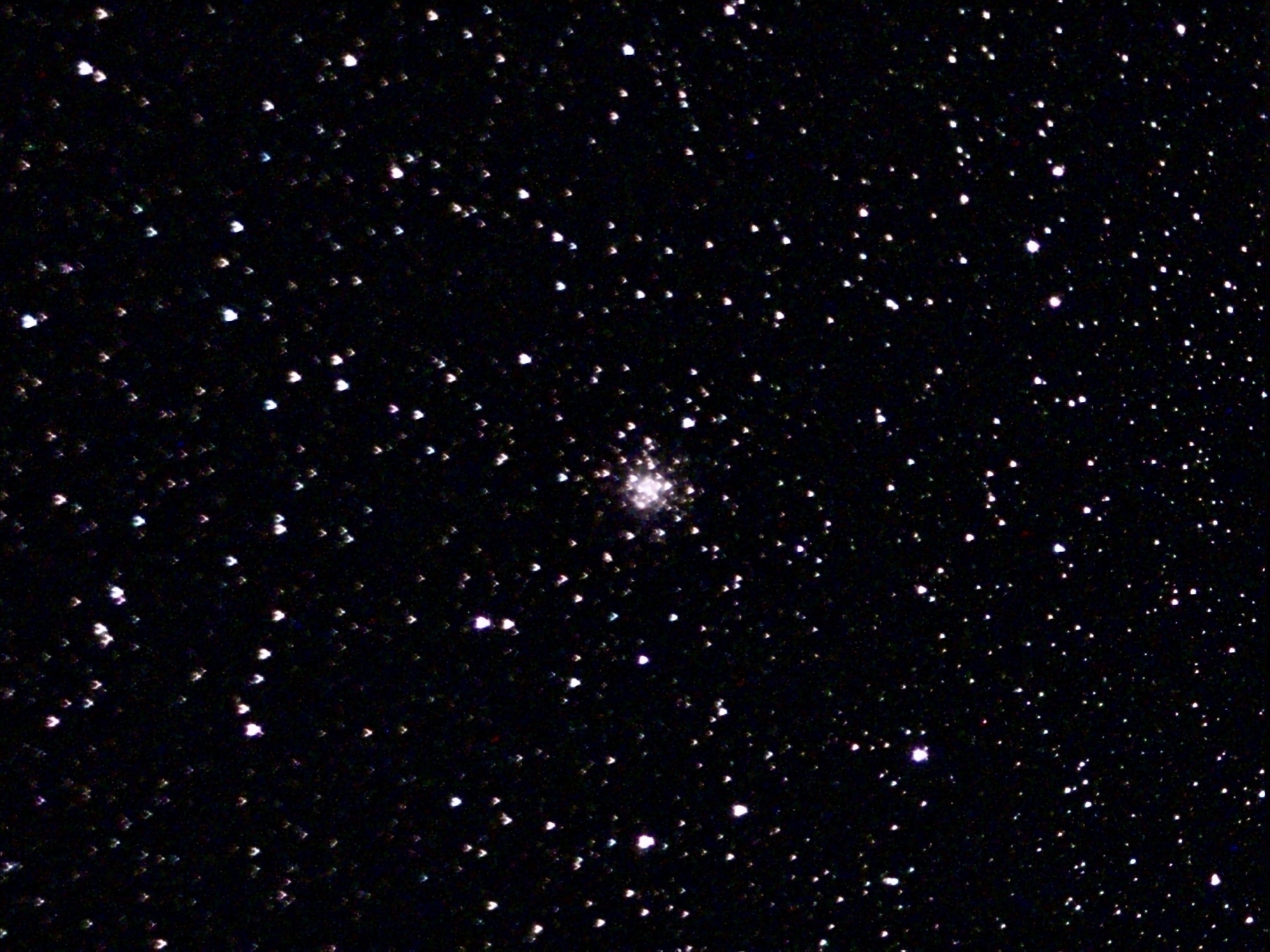
Taken: 27 April 2024 at 1:34AM EST
Equipment: Unistellar Equinox2
General Information:
- Messier Designation: M56
- Type: Globular Cluster
- Distance from Earth: 33,000 light years
Messier 56, or M56, is a globular cluster located in the constellation Lyra, roughly 33,000 light-years away from Earth. Discovered by Charles Messier in 1779, M56 is composed of hundreds of thousands of ancient stars densely packed into a spherical shape, which is typical of globular clusters. The cluster’s stars are gravitationally bound, sharing a common motion through space, and are characterized by their old age and low metallicity, reflecting the early stages of the Milky Way’s formation. M56 appears relatively faint in the night sky, making it a challenging but rewarding target for amateur astronomers equipped with telescopes. This cluster provides valuable clues about the early chemical environment of the galaxy and the evolutionary history of stellar populations.
Additional Details from NASA:
Hubble Image:

-
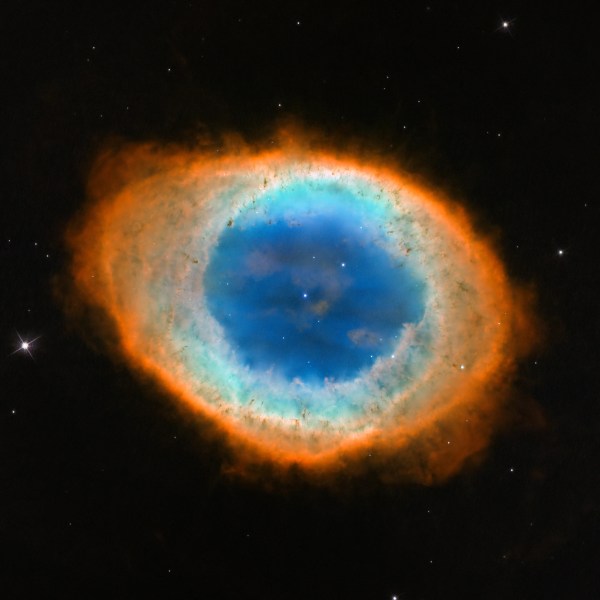
Astronomy Photo: Ring Nebula
My Observation:
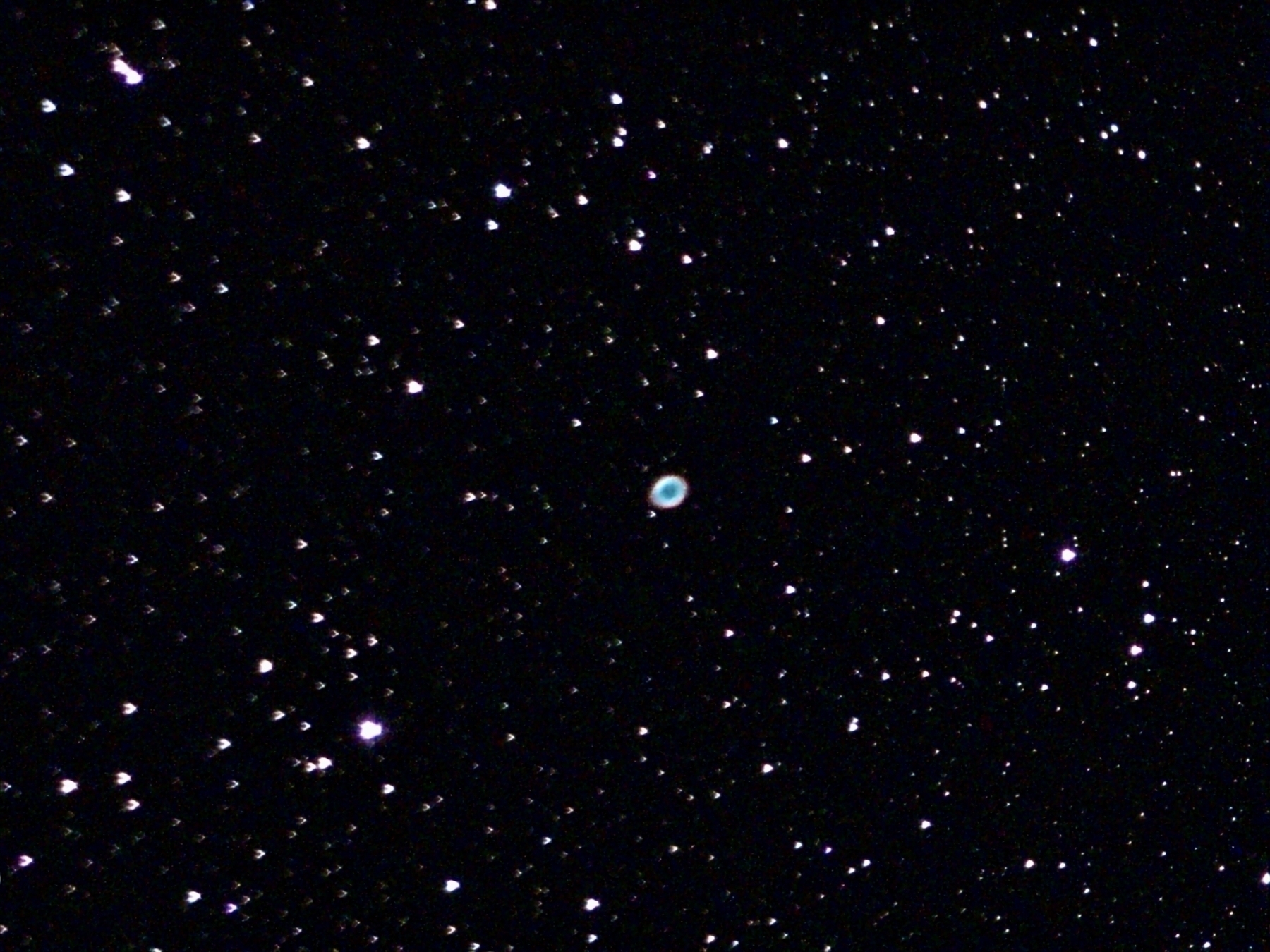
Taken: 27 April 2024 at 1:28AM EST
Equipment: Unistellar Equinox2
General Information:
- Messier Designation: M57
- Type: Planetary Nebula
- Distance from Earth: 2000 light years
The Ring Nebula, also known as Messier 57 (M57), is a stellar nebula located approximately 2000 light years away from Earth. It is a striking example of a planetary nebula, formed when a dying star sheds its outer layers of gas, creating a ring-like structure of glowing gas and dust. The central star, a white dwarf, is the remnant of the star that once existed in the center of the nebula. The Ring Nebula is a popular target for amateur astronomers due to its bright and distinctive appearance in the night sky.
Additional Details from NASA:
Hubble Image:
-
Astronomy Photo: Dumbbell Nebula
My Observation:
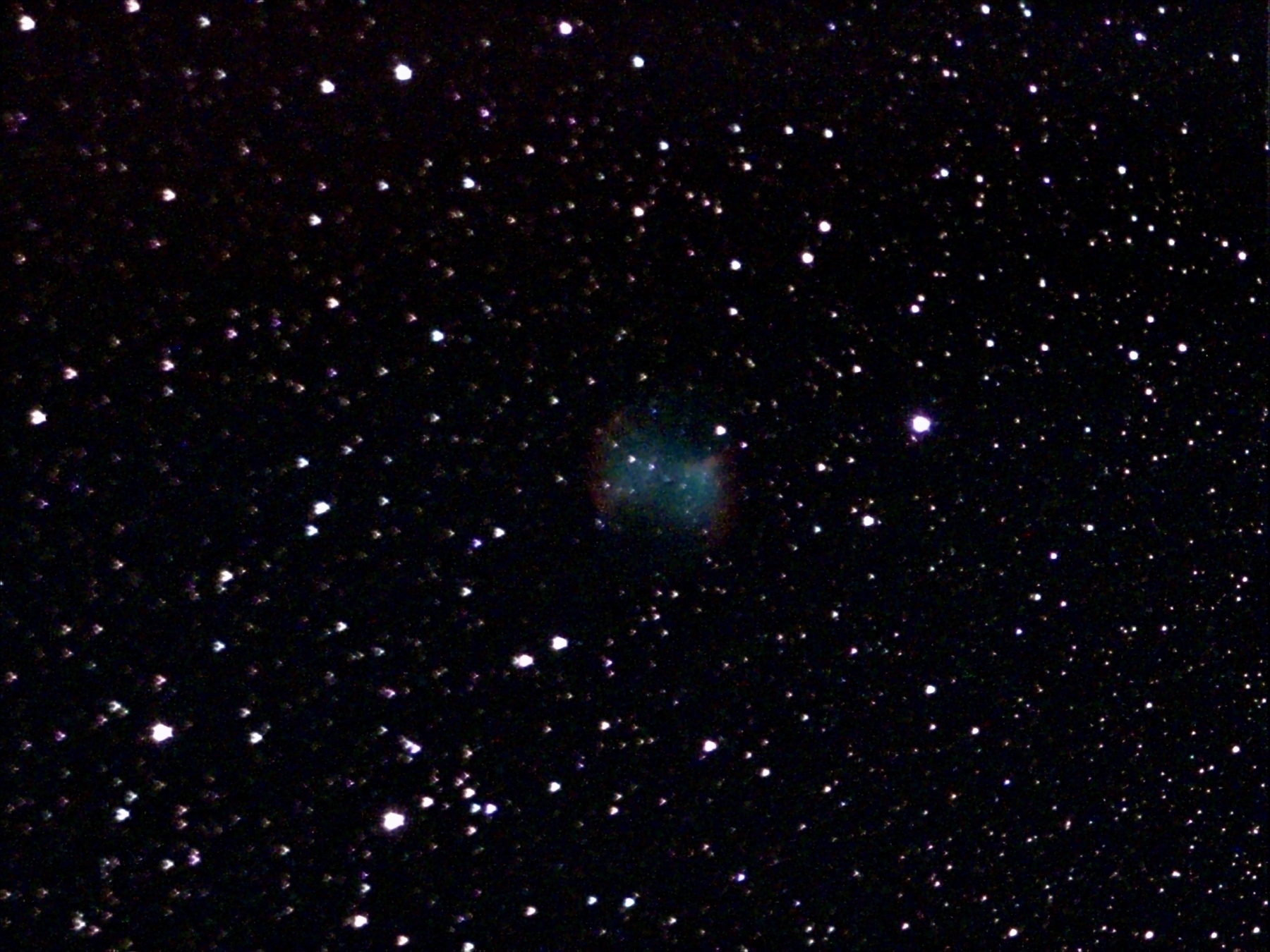
Taken: 27 April 2024 at 1:37AM EST
Equipment: Unistellar Equinox2
General Information:
- Messier Designation: M27
- Type: Planetary Nebula
- Distance from Earth: 1360 light years
The Dumbbell Nebula, also known as Messier 27 (M27), is a planetary nebula located in the constellation Vulpecula, approximately 1,360 light-years away from Earth. It is one of the brightest and largest planetary nebulae visible in the night sky, making it a popular target for amateur astronomers. The nebula was discovered by Charles Messier in 1764 and is named for its distinctive dumbbell shape, characterized by a bright, elongated central region surrounded by a complex structure of gas and dust. The Dumbbell Nebula is the result of a star similar to the Sun expelling its outer layers into space at the end of its life, illuminating the surrounding gas to create the nebula’s vivid colors and intricate appearance. This celestial phenomenon offers insights into the life cycle of stars and the processes that shape the interstellar medium.
Additional Details from NASA:
Spitzer Space Telescope Image:

-
I would be their eucharist
“You could have a small fire at night. Maybe find a cave. A mountain stream. I’d have a canteen for water for when the time came that I was too weak to move about. After a while the water would taste extraordinary. It would taste like music. I’d wrap myself in the blanket at night against the cold and watch the bones take shape beneath my skin and I would pray that I might see the truth of the world before I died. Sometimes at night the animals would come to the edge of the fire and move about and their shadows would move among the trees and I would understand that when the last fire was ashes they would come and carry me away and I would be their eucharist. And that would be my life. And I would be happy.”
-from Stella Maris by Cormac McCarthy 📚 💬

-
The Summit of Mount Everest
When the climbers in 1953 planted their flags on the highest mountain, they set them in snow over the skeletons of creatures that had lived in the warm clear ocean that India, moving north, blanked out. Possibly as much as twenty thousand feet below the seafloor, the skeletal remains had turned into rock. This one fact is a treatise in itself on the movements of the surface of the earth. If by some fiat I had to restrict all this writing to one sentence, this is the one I would choose: The summit of Mt. Everest is marine limestone.
-
from Annals of the Fomer World by John McFee
📚 💬
-